 |
| Male Baya weaver bulding new nest on Mimosa pigra, commonly known as the giant sensitive tree |

Showing posts with label Baya Weaver. Show all posts
Showing posts with label Baya Weaver. Show all posts
05 September 2026
Baya weaver New Nest on Giant Mimosa Pigra


26 September 2024
Male Baya Weaver feeding on grass seeds
Male Baya Weaver (Ploceus philippinus infortunatus)
 |
| eating the savanna grass (Axonopus compressus) seeds |
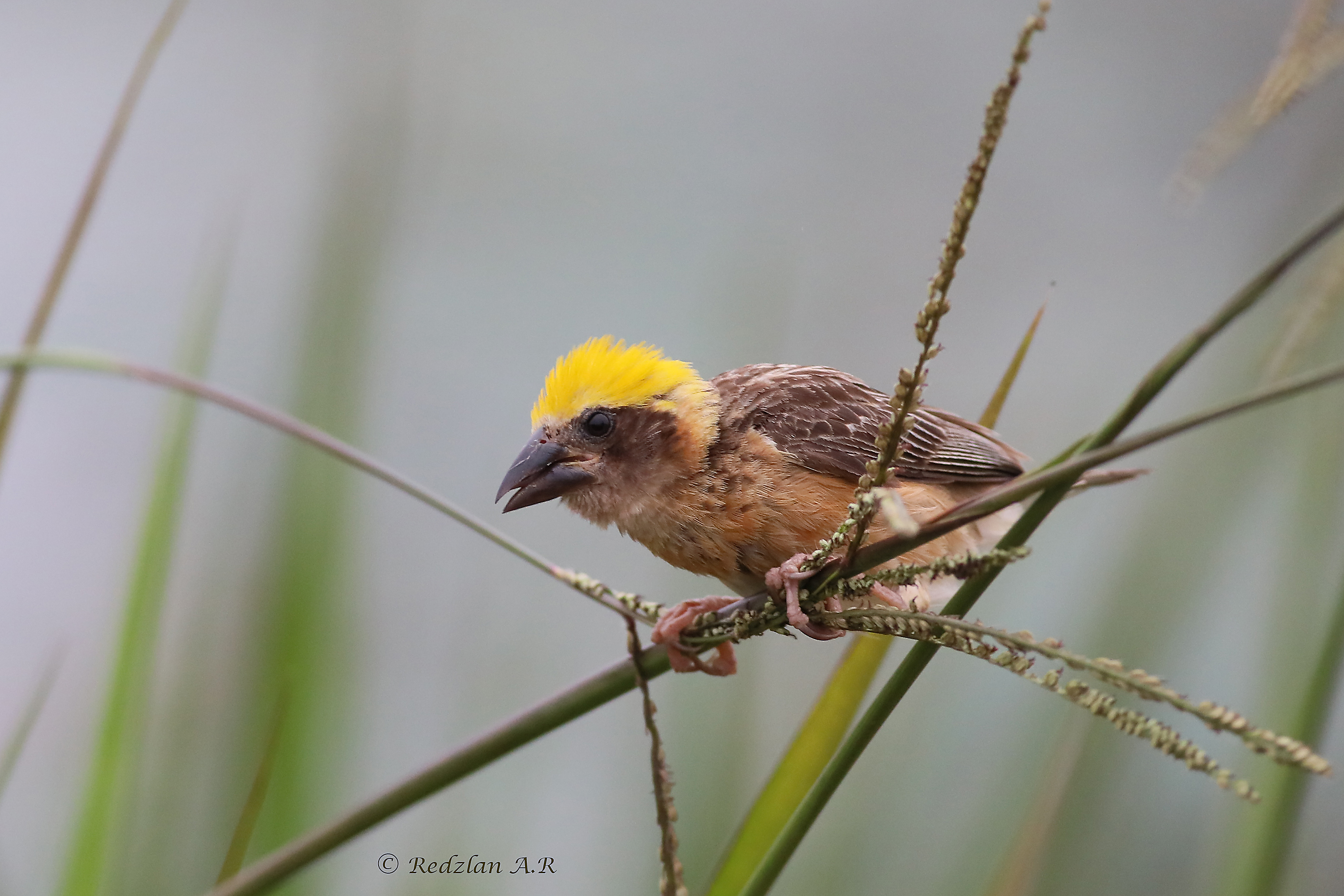 |
| yellow cap |
 |
| Male Baya Weaver (Ploceus philippinus infortunatus) |
02 July 2023
Birding at Taman Tasik Raub
Taman Tasik Raub is a lake that originated from the activity of extracting gold.
Raub has a well-known history for its gold mining industry. The term Raub comes from the term "Raub," which refers to the act of digging or searching for gold.
People come here for walking or jogging every morning and evening. A few are present to unwind with their loved ones. I arrived with a large camera lens to photograph the beauty of this location.
Raub has a well-known history for its gold mining industry. The term Raub comes from the term "Raub," which refers to the act of digging or searching for gold.
People come here for walking or jogging every morning and evening. A few are present to unwind with their loved ones. I arrived with a large camera lens to photograph the beauty of this location.
 |
| Taman Tasik Raub, Pahang |
 |
| A pair of Baya Weaver. The breeding male has a bright yellow crown. |
 |
| Male Baya weaver (above left) bringing food to the chick |
 |
| Active nest of Baya Weaver (Ploceus philippinus infortunatus) |
 |
| New fresh (green) nest |
 |
| Early morning view of the lake from the far end |
 |
| Five egrets in a blurry shot |
 |
| Little egret landing |
%20.jpg) |
| Little Egret ow fly passes the Taman Tasik Lake bank. |
 |
| The Intermediate egret (Ardea intermedia )- in flight |
 |
| A flock of Pacific Swallows and House Swifts foraging close to the water surface. |
 |
| A few of them scoop the water on the fly, or are they catching food? |
 |
| A mix of Pacific Swallow and House Swift. |
I have seen the Pacific Swallow drink water on the fly, but this action is not drinking because the swoop is forceful.
Could they forage for insects on the water surface that float, like water striders, fishing spiders, and mosquitoes?
 |
| I shot from this yellow concrete platform. It is very difficult to focus on those tiny and fast-flying swallows. |
 |
| Jogging starts from the front, near the car park. One loop or lap equals 1km. |
 |
| Striated heron with a nesting material (stick). |
 |
| The striated heron (Butorides striata) |
 |
| foraging in the Willow tree, (Salix species). |
 |
| Three juvenile Striated Herons hiding in the willow leaves |
 |
| An adult-striated heron is not hiding from the photographer. |
 |
| This Brown-throated Sunbird (male), head is partially hidden also on a willow tree. |
 |
| You can't ignore this Common Tailor-Bird chirping loudly on the bush on the lake bank. |
 |
| This yellow-bellied Prinia (Prinia flaviventris) also makes a loud call to show its presence. |
 |
| The Asian water monitor (Varanus salvator macromaculatus) shows its forked tongue. |
 |
| uses its forked tongue to sense from which direction a smell is coming and swims toward it. |
 |
| searching for food at the lake's dam |
 |
| Red Leaf Heliconia |
 |
| A man is sitting in a chair, looking at his phone, or is he photographing me? |
 |
| sunrise |
 |
| concrete-paved path |

04 March 2023
Burung di Pokok Petai Belalang - Birds on River Tamarind tree
All the pictures below are of normal colours birds.
 |
| Male Baya Weaver resting White lead tree branch |
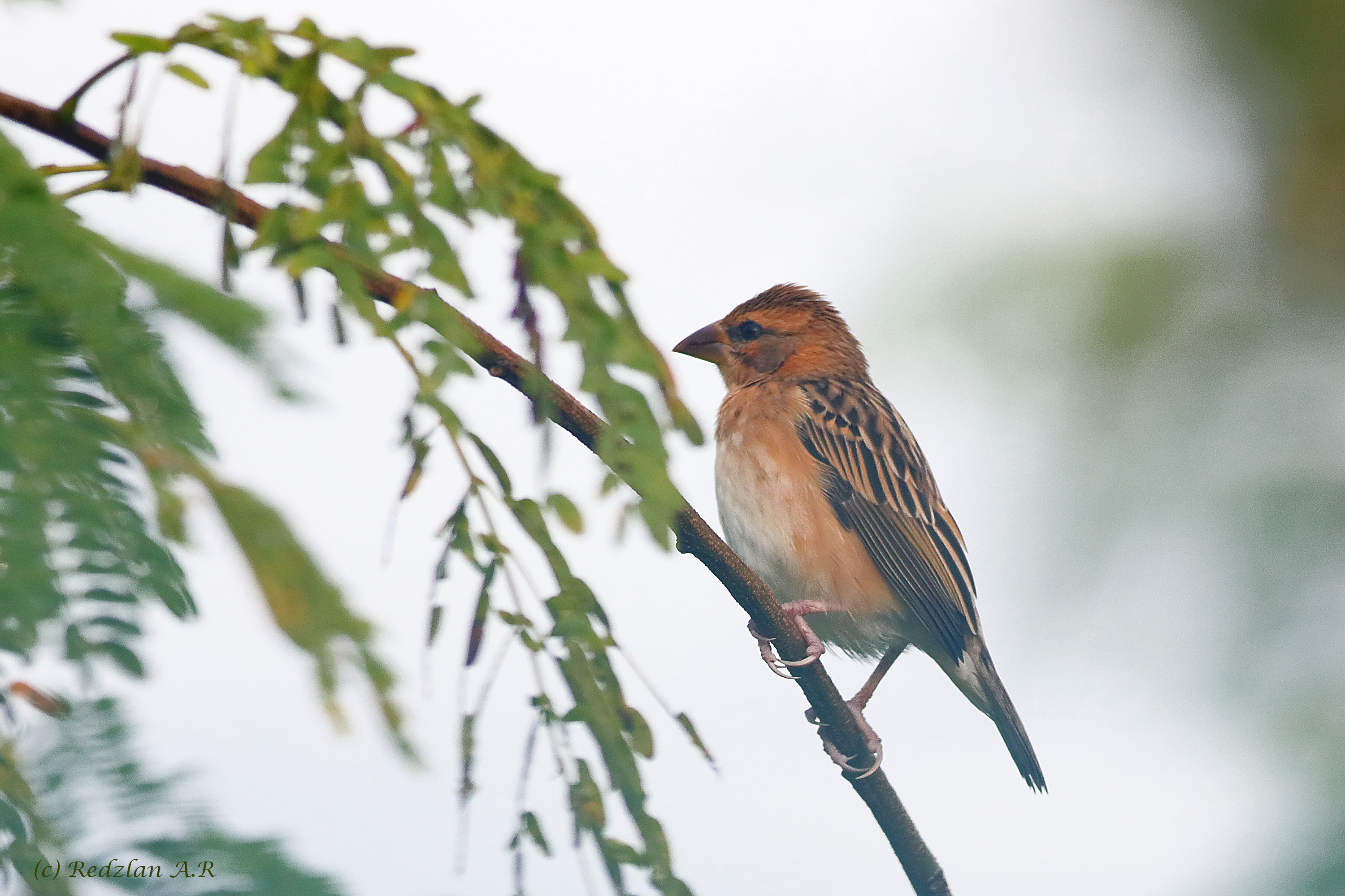 |
| female |
 |
| Foraging on death tree |
 |
| Dua ekor Tempua di atas dahan Petai Belalang |
 |
| Six Baya Weavers on River tamarind tree (Leucaena leucocephala) (Petai belalang) |
 |
| Plantain Squirrel eating River Tamarind legumes |
 |
| Brown Shrike perched on river tamarind tree |
 |
| Yellow-vented Bulbul pair -on Pokok Petai Belalang |
07 January 2023
Male Baya Weaver eating Grass Seeds
Male Baya Weaver eats grass seeds - Brachiaria grass (Urochloa subquadripara), Tropical Signal grass
 |
| Male Baya Weaver (Ploceus philippinus infortunatus) |
10 December 2022
Leucistic Baya Weaver
The Baya Weaver (Ploceus philippinus infortunatus)
Almost all parts of the body are white in colour, except for the yellow crown and part of the wings remain in black/brown colours.
While jogging around my housing area, I noticed a flock of birds that looked like sparrows/munia foraging on the grass. I saw a bird with a white feather, which was very unusual. I dashed home to get the camera. By the time I arrived, the birds were very far away.
 |
| Hello!, I am an England football supporter ;) |
 |
| Leucistic Baya Weaver (Ploceus philippinus infortunatus) - 2022-12-11 08:03:03.095 |
 |
| Male Leucistic Baya Weaver - 10:12:2022 - 7:40am |
 |
| Leucistic Baya Weaver |
The following three mornings (8 to 10 December 2022), I wait in the meadow for the weavers that usually eat the seeds.

 | |
| Foraging on the thorny Giant sensitive tree (Mimosa pigra) |
 |
| 8:12:2022 - 7:42am |
 |
 |
| Leucistic Baya Weaver, the head is yellow (male) - 7:12:2022 at 7:52am |
 |
| Male Leucistic Baya Weaver preening on the White Leadtree 9:12:2022 - 8:01am |
 |
| Feeding on the savanna grass (Axonopus compressus) seed 9:12:2022 - 7:56am |
Leucistic bird
In leucistic birds, affected plumage lacks melanin pigment due to the cells responsible for melanin production being absent. This results in white feathers unless the normal plumage colour also comprises carotenoids (e.g. yellows), which remain unaffected by the condition.
(info from Google)
Observations on Partial Albinism in Baya Weaver (Ploceus philippinus)
LINK HERE
How rare is a leucistic bird?
Only 236 of the 5.5 million birds reported each year had leucism or albinism, making up a tiny proportion of birds with abnormal plumages. In other words, only about 1 bird in 30,000 has leucistic or albinistic plumage. Based on these results, leucism and albinism are very rare occurrences among birds.
(from Google)
 |
| Leucistic Baya Weaver (Male) in full breeding plumage. Pic by: Sushant Jadhav, from Facebook Indian Birds |
The picture below is of normal colours birds.
|
| Male Baya Weaver |
Subscribe to:
Posts (Atom)